The first hearing for the Avenir's New York casino went fairly well, but there are three bids for the same space in Manhattan.
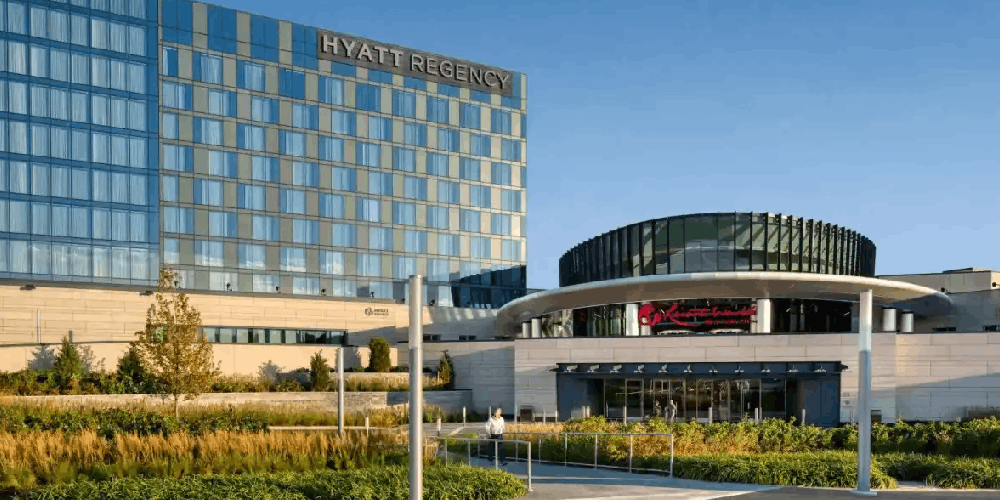
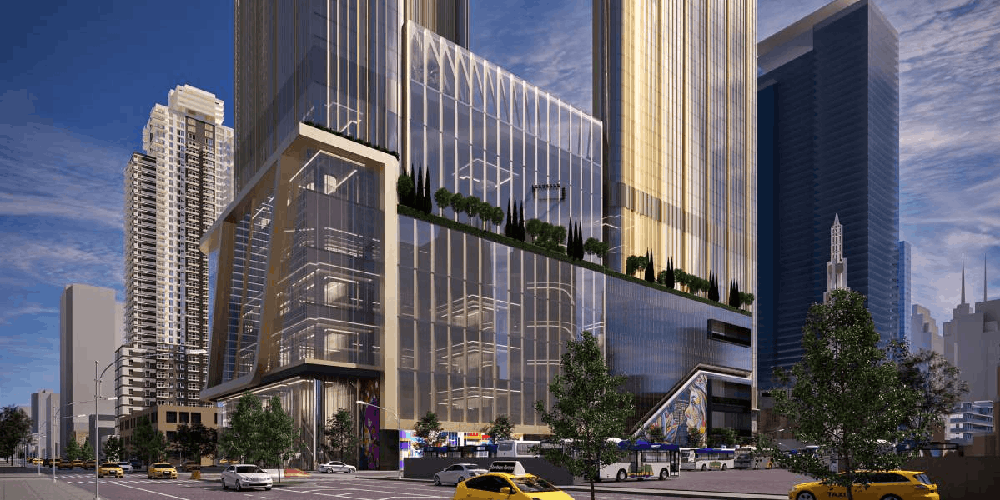
If Silverstein Properties and its partners get one of the three available downstate New York casino licenses, they will build their Avenir integrated resort on the West Side of Manhattan, just minutes from the Javits Centre.
The Javits Centre was the best place for Avenir's first public hearing on Wednesday, which was put on by the project's community advisory group. The six-member committee must hold at least one more hearing before they can issue a binding vote, which is due on September 30. The vote will show how much support Silverstein has from the public, and he needs at least four members to back him up in order to move forward.
Avenir is one of three bidders seeking a casino licence in Manhattan, which has the most of any New York City borough. Many groups and interests will be affected by a multibillion-dollar casino development in the area with the highest population density in the city and the country. The two hearings in Manhattan (Avenir and Caesars Times Square) have been the longest of any that have been held so far, which isn't surprising.
During the five-hour session on Wednesday, more than 100 people spoke about every part of the idea, both good and bad.
Many speakers said that Silverstein had earned the trust of Manhattanites as a landlord and for its work on redeveloping the World Trade Centre site following 9/11. But not everyone agreed on that goodwill.
Taking on New York casino worries head-on
Before the public comment period, the Avenir partners made a detailed presentation that focused on specific issues that the CAC had brought up in a previous presentation on July 16.
Lisa Silverstein, the CEO of Silverstein, was the first to speak. Her father, Larry, started the company in 1957. Silverstein owns the empty lot at the junction of 41st Street and 11th Avenue. The developer has built several homes nearby, but they believe that the only way to develop that land is to create a casino because it would cost more and need more infrastructure.
Avenir is probably the New York casino offer that has changed the most since it was first proposed:
The design went from two connected buildings to one.
Hyatt and Rush Street Gaming have added Partners Destinations.
The number of affordable housing units that must be built has gone up to 500.
The ground floor will also have a free community art exhibit that will take up an entire city block along 11th Avenue.
The project currently costs $7 billion.
Silverstein remarked, "Our site is fully zoned and ready to be dug up." "There is no need to change, tear down, rezone, or move tenants around." It is a vacant land in an area with few people. This part of the West Side requires an economic motor to change the neighbourhood even more, bringing more life and business, which makes it safer.
Dino Fusco, COO of Silverstein, said that a separate conference room had been set up for any follow-up questions following the hearing to stress the importance of community involvement. Fusco stated that the company's "very long history building residential properties" should ease worries about housing commitments, which is a big issue in the area.
Plans for traffic and safety in a busy part of New York City
Traffic jams and maybe crime are the other significant problems with Avenir. The presentation talked about these problems, but they were still some of the most common complaints from people who didn't believe the promises, such people who lived in the area.
According to environmental specialist Connor Lacefield, the best way to get to the site would be:
40% by train
25% on foot
20% by automobile and 15% by bus
This is very different from bids outside of Manhattan and Coney Island, which are offering thousands of parking spots. Silverstein wants to stop traffic jams by giving a free shuttle service and other incentives to get people to drive less. But there would still be effects from more cars coming in, especially at the crossroads around the site.
Lacefield remarked, "The intersections in this area would be the most affected by the Avenir, but even here, the Avenir's vehicle trips would be a very small addition to the neighbourhood traffic, only about 2% of the total trips."
Bill Dacunto, the head of security at Silverstein, talked about several extra safety features, such as an NYPD substation, EMTs and medical facilities on site, and connections with local safety groups.
Tim Drekhoff, the CEO of Rush Street, talked about how his organisation runs the Avenir casino. Greenwood Gaming, the project's original partner, is still involved, but they haven't been as involved in the processes. Rush Street runs casinos in the Midwest, especially in or near big towns like Chicago and Philadelphia. The business has also run Rivers Schenectady in upstate New York since it launched in 2017.
Drekhoff added, "We've never bought a casino; we build them from the ground up." "We've been the first casino in every city we've hosted. We'll bring that specific knowledge to the far West Side.
Which groups are most in favour of casinos in New York?
There is a recurrent thread in the bids for New York casinos: unions, business groups, and vendors are in favour, but those who live near the sites are mostly against them. Silverstein is well-known to unions since he has built multiple high-rises nearby. Unions have been a big part of the process.
Mike Vastarelli, a business representative for the NYC District Council of Carpenters, said, "Silverstein Properties has been a strong supporter of the building trades for decades." "They don't just talk about supporting union workers; they do it. Every year, with every project.
One of the project's greatest outreach activities is to help people who don't have enough food. If chosen, Avenir will work with Rethink Food, a group that gives away extra food from businesses to areas who don't have enough. Rethink works with a lot of other groups in the city that are similar to it. A lot of people who supported Avenir worked in the food sector.
"When we heard about the casino project, we emailed all the providers and all the people who had proposals, but not a single one of them replied," said Matt Jozwiak, CEO of Rethink. "[Avenir] came to us and said, 'We're worried about too much food, we're worried about sustainability, we're worried about affordability, and we want to work with Rethink Food to make as many meals as possible for low-income New Yorkers.'"
Rivers Schenectady also deployed a group of employees almost three hours south to Manhattan. HR personnel, casino workers and security guards were among those who praised Rush Street's ethos of establishing careers.
People in the area speak out against it
Some people who lived in Silverstein buildings praised them, but many others were not happy with them. People that spoke were requested to give their ZIP code, and it looked like most of them from neighbouring 10036 and 10018 were against it.
Local resident Jacqueline Lowry stated, "I'm going to ask the people we vote for, not people who live in other places, to please protect us from this predatory business."
Many people said that Silverstein's current residential towers show that it can build properties without casinos. Even though the project's housing promise went up to 2,000 units, with 500 of them being cheap, that didn't appear to work with locals.
Webb Seager, a citizen, said, "Housing, not a casino, is the clear and urgent need for real estate development in New York City."
Former Tropicana worker talks about expanding iGaming in New York
James Jorasch's testimony on Wednesday was one of the most interesting.
Jorasch, who worked as an accountant at the Tropicana Las Vegas in the 1980s, said that casino revenues always reach a peak and then fall. States search for methods to fill the gap once the decline starts. He noted that in recent years, the response has been to make online sports betting or iGaming legal. Both of these are very popular on the East Coast.
Even though there have been a lot of attempts to make iGaming legal in New York in the past few years, not much has happened. But the fact that the state's online sports betting sector is doing so well is a good sign for the future of iGaming. This assumption is scary enough that both Las Vegas Sands and Wynn Resorts pulled out of the New York casino race earlier this year because they were worried about online retail cannibalisation.
Once the casino process is over, the question of internet growth will probably only start to come up. But would it have been better to start those talks now? So far, Jorasch is the only speaker to bring up the subject of gaming expansion after licenses are given out.
Jorasch remarked, "I think we need to decide today whether the casinos get part of that money or not before we approve the casinos."